Why the past doesn’t simply disappear
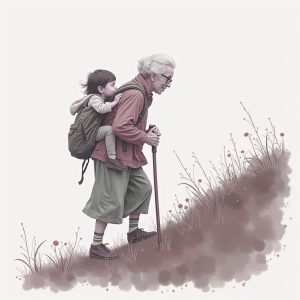
The child does not disappear.
They grow older. But they do not grow up in the way we imagine.
The part of us that learned to stay quiet…to minimise… to turn away from feeling…remains.
Not loudly. Not constantly. But present. It shows up in moments that seem, on the surface, unrelated.
A comment that feels sharper than it should.
A reaction that feels bigger than the moment.
A sudden urge to withdraw, to please, to shut down.
And it can be confusing. Because the adult part of us knows this moment is manageable. But something inside feels very different.
This is the younger part. The part that learned early what was safe…and what was not.
It doesn’t respond to logic. It responds to memory. Not always conscious memory. But emotional memory.
The feeling of not being heard. Not being believed. Not being met.
And in those moments, it is not the present we are reacting to. It is the past, still active beneath the surface.
This is why patterns repeat. Not because we choose them. But because something inside us is still trying to protect us in the only way it knows how.
To stay quiet.
To stay small.
To stay safe.
And so we carry this part forward. Into relationships. Into decisions. Into how we speak to ourselves. Often without realising it.
The important thing to understand is this:
Nothing is “wrong” with you.
This is not weakness. It is adaptation.
A younger part of you doing exactly what it needed to do at the time. And it is still doing it now. Not because it has to. But because it hasn’t yet learned that things can be different.
That it can be heard.
That it can be met.
That it is safe to feel.
This is where change begins. Not by pushing that part away. But by recognising it.
“You can come with me.”
“I can listen now.”
“You don’t have to do this alone anymore.”
And slowly, over time, something begins to shift. Not all at once.
But enough.