
How early experiences become an inner voice
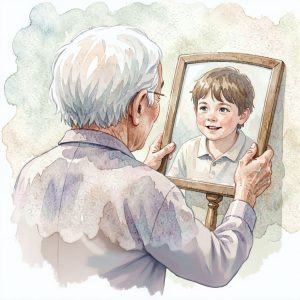
Children don’t stay children. They grow.
But what they learn about themselves often stays exactly as it was.
A child who wasn’t heard doesn’t just forget that experience. They make sense of it.
Quietly.
Automatically.
They begin to form beliefs. Not in words at first. But in feeling.
“I don’t matter.”
“I’m too much.”
“I shouldn’t feel this way.”
“It’s safer to stay quiet.”
These beliefs don’t feel like beliefs. They feel like truth.
And as the child grows, those quiet understandings begin to shape how they move through the world.
They may become the person who: Doubts themselves constantly
Struggles to name what they feel
Apologises for having needs
Puts others first, even when it hurts
Shuts down when emotions get close
Tells themselves “it’s not a big deal” even when something inside says it is
From the outside, this can look like personality.
But it isn’t.
It is adaptation.
A way of staying safe in an environment where one didn’t feel safe.
Over time, something else happens. The outside voices that were once dismissed or minimised become internal.
The child no longer needs to be told
“you’re overreacting.”
They tell themselves.
The voice that once came from outside becomes part of how they think.
And so the pattern continues.
Quietly.
Automatically.
This is why it can feel so confusing in adulthood. Part of you feels something strongly. Another part dismisses it just as quickly.
One part reaches out. Another pulls back. It can feel like conflict.
But it isn’t.
It is the past and the present speaking at the same time.
And the part that learned to stay quiet is often the loudest. Not because it is stronger. But because it has been there longer.
The important thing to understand is this:
These patterns were learned.
And what is learned can begin, gently, to be unlearned.
Not by force. Not by judgement. But by slowly noticing what we say to ourselves…and choosing, over time, to respond differently.
A quieter voice can begin to form. One that says:
“I can listen to this.”
“This matters.”
“I don’t have to push this away.”
And when that happens, something begins to shift. Not all at once.
But enough